This article gathers the most important issues that may come up during the initial project setup and everyday work with the Semly panel.
Place for a photo:
Screenshot of the Semly dashboard or the help section in the panel
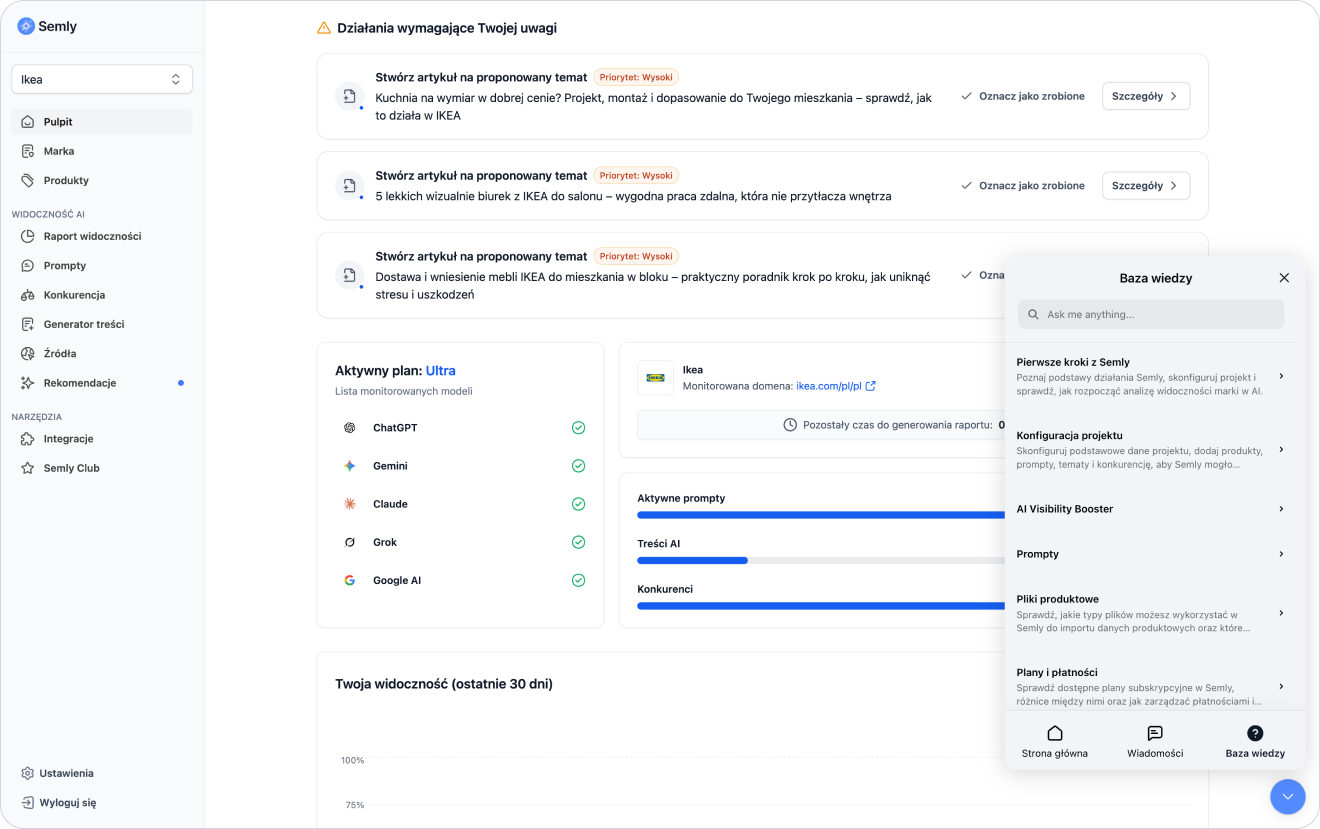
Semly is a platform for monitoring and increasing brand visibility in answers from AI models such as ChatGPT, Gemini, Claude, Grok, or Google AI Overviews.
Semly helps you check:
whether AI knows your brand
for what kind of questions the brand shows up
whether AI recommends it
how it compares to the competition
what sources AI models use
what actions can improve visibility

The first data can show up after you start monitoring and the AI models’ answers are processed.
The time it takes for data to appear can depend on:
the number of prompts
the number of analyzed AI models
the active plan
project configuration
website availability
product feed availability
scope of analysis
There can be several reasons why your brand is missing from AI answers.
Most common reasons:
The AI doesn’t have enough information about the brand
the brand isn’t well connected with the given prompt
competitors have stronger sources
the site is missing content that answers the user’s question
the brand description is too generic
product descriptions are poor
the site may be poorly accessible for AI bots
there’s missing content in the knowledge base
the AI model uses sources where your brand doesn’t appear
What to do:
complete your brand profile
add products or a Google Shopping XML file
check the prompts
analyze the sources
compare yourself with the competition
follow Semly’s recommendations
generate content for the most important visibility gaps

Competitors may show up more often if AI models have more data, sources, or content linking them to a given user query.
Possible reasons:
the competition shows up in rankings
the competition has more reviews
the competition has better how‑to content
the competition has more detailed product descriptions
the competition is quoted more often
the competition appears in sources used by AI
your brand doesn’t have content for a given prompt
your offer is described too generally
What to check:
prompts only for the competitor
sources supporting the competition
brand position in the answers
sentiment of the answers
Semly recommendations
gaps in content and product data
Different AI models can generate different answers to the same prompt.
The differences can come from:
other data sources
a different way of generating answers
model updates
different interpretation of the prompt
different mechanisms for citing sources
differences in data availability
a different context of the answer
Example:
ChatGPT might mention your brand, Gemini might recommend a competitor, and Claude might answer more neutrally.
AI answers aren’t fixed. The same prompt can give different results depending on time, model, sources, and context.
Visibility can change because of:
AI model updates
new sources on the Internet
changes on the brand’s website
changes in competitors’ content
new articles in the knowledge base
product feed updates
seasonality of queries
implemented recommendations
changes in source availability
Semly analyzes visibility, shows the sources of problems, and prepares recommendations. Some actions can be done automatically in the panel, and some need to be implemented manually.
Examples of automatic actions:
generating an article
preparing content in the Generator
publishing in the knowledge base
marking the recommendation as completed
preparing ready-made content or files
Examples of manual actions:
pasting the llms.txt file
updating robots.txt
adding a link in the page footer
adding the knowledge base to the XML sitemap
improving the content in the CMS
updating data in the store

In most cases, the basic Semly setup doesn’t require installing any code on your website.
You can use Semly through:
brand data
prompts
competitors
a Google Shopping XML file
ready-made integrations
a knowledge base on a subdomain
Some actions may require technical changes, e.g. DNS configuration, adding a link in the footer, updating robots.txt or adding llms.txt.
Just tracking visibility in Semly shouldn’t interfere with your site’s SEO, because it doesn’t require installing scripts or changing the code.
SEO can only be affected by the actions you implement outside Semly, for example:
publishing new content
adding a knowledge base
internal linking
updating robots.txt
changes in the sitemap
changes in the site structure
improving product descriptions
Google Shopping XML is a product file that contains data about products in an online store.
It can include, among other things:
product names
product descriptions
prices
availability
categories
photos
links to products
product identifiers
brand
EAN or GTIN
Semly uses an XML file to better understand the store’s offer and analyze it in the context of questions asked to AI models.
If the products weren’t imported, check the most common reasons.
Possible issues:
the link doesn’t lead directly to the XML file
the file requires a login and password
the login details are incorrect
the file is empty
the file contains technical errors
the server blocks access to the file
the file address has changed
the file has incorrect encoding
the file doesn’t contain the required product data
What to do:
open the XML link in the browser
check the link in incognito mode
make sure you can see the XML structure
add login and password if the file is protected
check the file encoding
contact a technical person or Semly support
A prompt is a question or command from the user to the AI.
In Semly, a prompt represents a real user intention, e.g. a question about a product, a service, a comparison, or a recommendation.
Example of a weak prompt:
living room furniture
Example of a good prompt:
I’m looking for a store where I can order modern living room furniture with delivery and assembly. Where’s the best place to look for it?
At the beginning it’s better to add fewer, but well‑thought‑out prompts.
A good start is:
a few prompts for the most important categories
a few shopping prompts
a few comparison prompts
a few educational prompts
a few prompts about services or locations, if relevant
Sources are domains, pages, and materials that AI models can use when generating answers.
Sources can be:
brand website
blog
knowledge base
product pages
category pages
rankings
catalogs
reviews
forums
industry media
marketplaces
competitors’ websites
Sources help you understand why AI recommends a given brand or why the competition shows up more often.
Semly knowledge base is a public page with articles prepared based on the analysis of the brand’s visibility in AI.
It can run under your subdomain, e.g.:
knowledge.yourdomain.comThe knowledge base is available to users and LLM bots. It’s technically optimized for AI models and can include an automatic sitemap, llms.txt, structured data, content in Markdown and JSON-LD, and public access via API and MCP.
Yes. Articles in the knowledge base should be unique and shouldn’t be copied 1:1 from a blog, product page, or category page.
To avoid duplicate content:
create articles for specific prompts
describe the topic from a different perspective
add practical context
link to existing pages instead of copying their content
update articles according to the recommendations
avoid repeating the same paragraphs

Yes, it’s a good idea to add a link to the knowledge base from the main page, for example in the footer.
It’s also worth adding the knowledge base to the XML sitemap.
Thanks to this:
users will find content more easily
bots can detect the knowledge base faster
the knowledge base will be better connected with the main domain
articles can be more easily analyzed by AI systems
The llms.txt file is a simple text file that helps AI systems understand what the site is and where its most important resources are located.
It can contain:
brand description
link to sitemap
link to knowledge base
links to the most important sections
information about language and market
tips for AI systems
Not always. AI models and systems that analyze sources may need time to take new content or technical changes into account.
The results can be affected by:
frequency of model updates
availability of new sources
quality of the implemented content
correctness of linking
site availability for bots
competition in a given topic
number of monitored prompts
changes in product data
If you need help, write to the Semly support team:
[email protected]It’s good to include the following in your ticket:
account email address
brand name
domain address
a short description of the problem
screenshot
link to the XML file if the problem concerns products
prompt name if the problem concerns a report
information about when the problem occurred
Welcome to Semly
Quick start with Semly
Key metrics
How to complete your brand profile
How to add products or a Google Shopping XML file
How to read the Visibility Report
How to read Semly recommendations
How to set up a knowledge base on a subdomain
The most common questions are usually about project setup, brand visibility, differences between AI models, product import, sources, recommendations, and the knowledge base.
The most important rules:
complete the brand profile
add products or an integration
create prompts as natural user questions
analyze the report together with competitors and sources
implement recommendations starting from the highest priority
publish unique content in the knowledge base
add a link to the knowledge base on your website
watch trends over time
if you run into any problems, contact [email protected]